Beijing bristle dolls: study the object together with its stage
A small crafted figure may be designed to move through its relationship with a supporting surface. Beijing bristle dolls make that relationship a useful subject of observation. Keep the figure and platform together in your notes, and distinguish a demonstration you actually watch from a still image that can show only part of the experience.
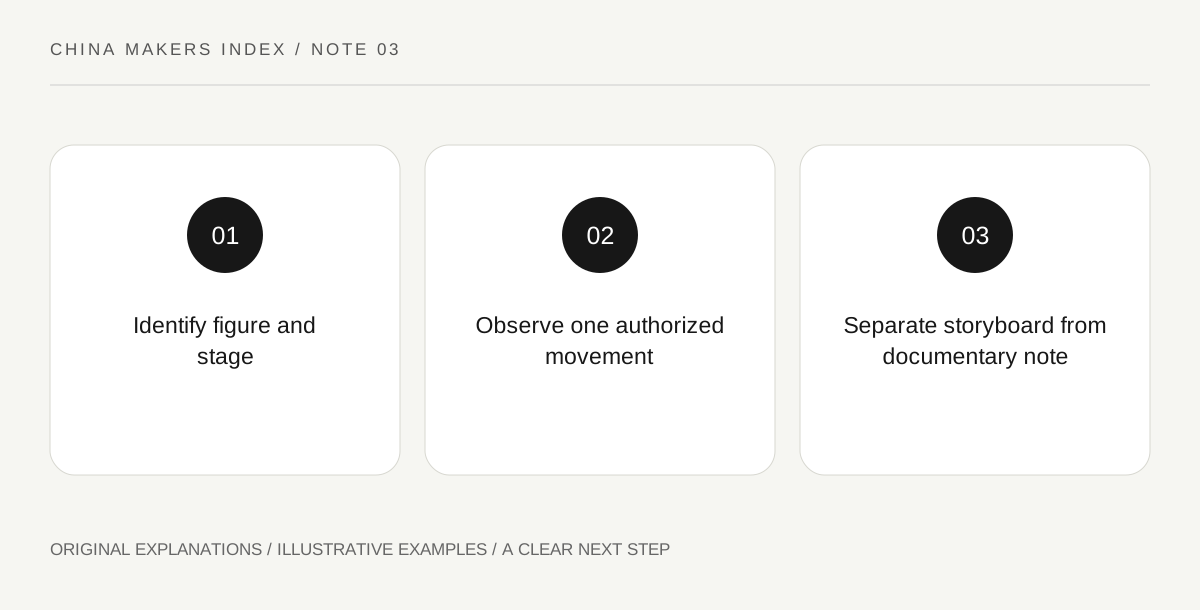
Original explanatory diagram. Read the full method and limitations below.
Name the performance relationship
Beijing’s official craft account presents bristle dolls performing on a copper-plate stage and connects them with operatic subjects. That is enough to establish that the object is not merely a static miniature. Write figure, supporting surface and demonstrated action as separate fields. A costume photograph may communicate character, while a motion record communicates another part of the design. Keeping those fields distinct helps you understand why a display without a demonstration can still be informative but cannot establish exactly how a particular figure moves.
Observe one motion rather than the whole show
If an authorized demonstration is available, choose one figure and follow a short interval of movement. Describe direction, pause and change in orientation without attributing them to an unseen mechanism. Ask the demonstrator what role the object’s contact with the stage plays. Do not touch, shake or test a display to satisfy your question. A performance object can be fragile, and the operator’s skill is part of what you are studying. Your observation should preserve that contribution rather than crediting every visible effect to the object alone.
Draw two positions and the shared surface
On paper, place two simplified poses of the same invented figure above one horizontal line. Add arrows showing a possible change in position. This is an original motion storyboard, not a mechanical plan for a bristle doll. Compare how the imagined action reads when the surface is present and when you erase it. The comparison reveals why a stage belongs in the explanation: movement is experienced in relation to a setting. It also helps you recognize the limits of a tightly cropped photograph that hides the support.
Keep the caption appropriate to the evidence
A caption for a still image can identify appearance and the documented type of object. A caption for a demonstration can also describe the motion you observed and name the demonstrator when known and appropriate. Avoid presenting an invented storyboard as a documentary account of a traditional performance. End by noting what remains to be learned about making and operating the object. That open question makes a future workshop or demonstration more purposeful without pretending that a few minutes of watching supply the maker’s full knowledge.
Illustrative design exercise
Illustrative storyboard: a learner draws an invented opera-inspired figure in two positions on one surface. The caption says that the sequence is imagined. After watching a permitted demonstration, the learner creates a separate note describing the actual pause and change of direction they observed. The two records share a design question while remaining clearly different kinds of evidence.
Questions that come up
Can a still photograph explain the whole object?
It can show appearance and context, but movement and operation require additional evidence. Record what kind of view you consulted.
Should I test a displayed doll to understand it?
Use an authorized demonstration or ask the operator. A visitor’s curiosity does not supply handling permission for a display or performance object.
References and scope
These sources support the factual background. Examples and exercises are original illustrative teaching material. References do not imply endorsement.
- Beijing magazine: Beijing Gifts, November 2025 — Bristle dolls performing on a copper plate and their operatic association; no mechanism specification.