Chinese sachets: plan the seam, opening and suspension separately
A small textile pouch combines three practical decisions that decoration can conceal: how its edges meet, where it opens and how it hangs. Study a documented Chinese sachet through those relationships. A paper mock-up helps you ask useful workshop questions without treating a decorative bag or its aromatic contents as a medical product.
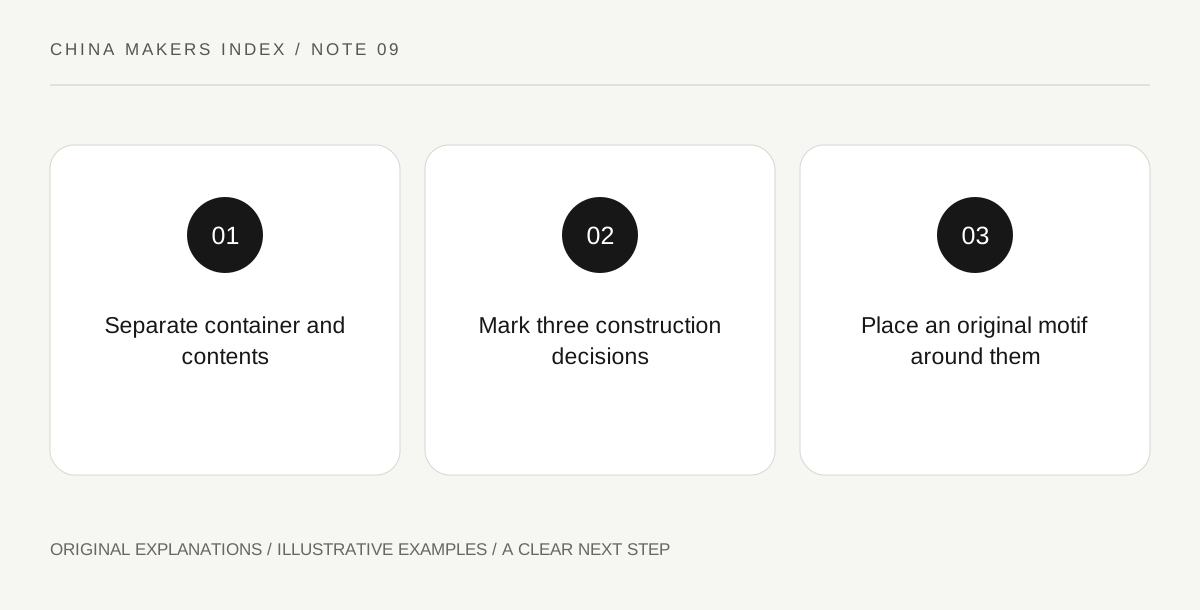
Original explanatory diagram. Read the full method and limitations below.
Recognize a textile container
Shanghai’s official craft account includes hand-sewn sachets with aromatic plant contents. This article uses that as a container-design reference and makes no health claim about the filling. Begin with the actual object’s stated materials and purpose, then separate container from contents. A scented interior does not explain how the textile structure is assembled. Equally, a beautiful stitched exterior does not identify what is inside. Two distinct information fields let you appreciate the making while keeping product-specific composition clear.
Build an empty paper mock-up
Fold a rectangle of ordinary paper and mark the edges that would meet in an imagined pouch. Use drawn lines or removable tape to indicate a seam, leaving a clearly marked opening. Add a separate mark for an imagined hanging loop. This is a layout model, not a sewing pattern or a tested container. Do not fill it with loose small items or aromatic materials for the exercise. Keeping it empty lets you change the three decisions easily and notice how one choice affects another before introducing real textile technique.
Test access and suspension conceptually
Imagine placing the pouch on a table, opening it and hanging it from the marked point. Does the opening remain reachable? Would a decorative element cover the place you need to handle? Move the marks if the relationships are awkward. These are questions for a workshop discussion, not proof that a finished design will carry weight or retain a particular filling. The real maker must account for fabric, stitching, closure and intended use. Your mock-up’s job is to make the questions visible enough to ask clearly.
Let decoration follow a resolved layout
Only after marking seam, opening and suspension should you add an original surface motif. Notice whether it crosses a seam or becomes hidden by a fold. A pattern that looks centered on a flat rectangle may shift on the assembled form. When sharing the result, identify it as a paper layout study inspired by sachet construction. If you buy a real sachet, retain the maker’s composition and care information and choose according to the recipient’s actual needs. Cultural interest does not require a promise of therapeutic effect.
Illustrative design exercise
Illustrative mock-up: a learner’s first paper pouch places a hanging point directly over its opening. Moving the suspension mark to a different position makes the imagined access clearer. A simple original leaf motif is then adjusted because a fold hides half of it. The page explains these decisions and remains an empty paper study, with no claim about medical use or tested storage performance.
Questions that come up
Does an aromatic filling establish a health benefit?
This article makes no such claim. Treat filling information as product-specific composition and seek appropriate professional information for medical questions.
Is a paper layout a ready-to-use sewing pattern?
No. Fabric behavior, seam allowances, closures and suitable materials require proper sewing instruction. The mock-up is a way to discuss design relationships.
References and scope
These sources support the factual background. Examples and exercises are original illustrative teaching material. References do not imply endorsement.
- Shanghai: Explore traditional crafts at TOP Central Park — The documented hand-sewn sachet with aromatic contents; excludes medicinal language and supplies no sewing specification.