Figures and movement3 min read
A miniature figure can carry a recognizable action before it has a detailed face or elaborate clothing. Studying dough figurines through gesture helps a beginner understand how much design happens at the level of body arrangement. An original paper exercise makes that question accessible without pretending that a simple drawing replaces a skilled modeling tradition.
Read the guide ↗
Figures and movement3 min read
A clothed miniature is more than a silhouette covered with decoration. Its costume has edges, folds and a relationship to the supporting body. Study those relationships through a paper overlay exercise, then use the questions to look more carefully at a documented silk figurine without assuming that every visible form is made from one material.
Read the guide ↗
Figures and movement3 min read
A small crafted figure may be designed to move through its relationship with a supporting surface. Beijing bristle dolls make that relationship a useful subject of observation. Keep the figure and platform together in your notes, and distinguish a demonstration you actually watch from a still image that can show only part of the experience.
Read the guide ↗
Figures and movement3 min read
A decorative feather arrangement can also be part of an object intended to move. A handmade shuttlecock therefore raises questions about balance, assembly and intended use. Study those questions through a maker’s explanation and a simple paper layout, while avoiding the assumption that an attractive display object is automatically suitable equipment for play.
Read the guide ↗
Pattern and surface3 min read
A glazed architectural ornament may be seen from far below rather than held in the hand. That viewing distance changes which design decisions remain legible. Study a documented Beijing liuli example through silhouette and large color areas, then make a paper comparison that separates close detail from the form a distant viewer can actually perceive.
Read the guide ↗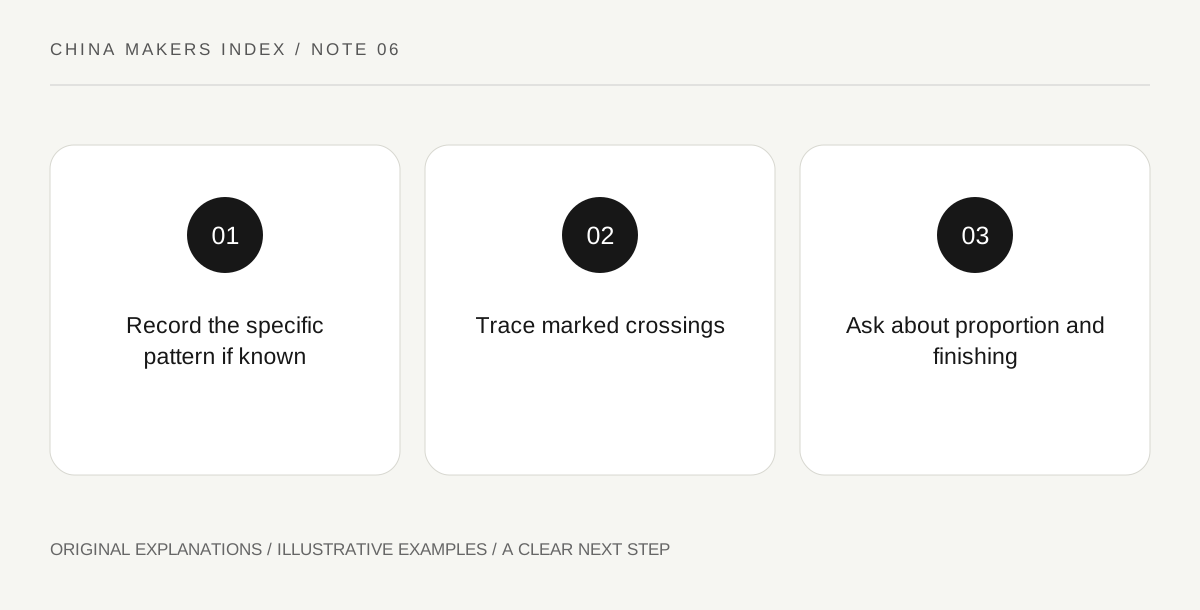
Pattern and surface3 min read
An elaborate decorative knot can look like a solid emblem until you follow the cord through it. A path map makes its crossings, loops and endpoints easier to discuss. Begin with a documented knot-making context, then use an original drawing exercise to learn a way of looking without claiming that one diagram teaches every named traditional knot.
Read the guide ↗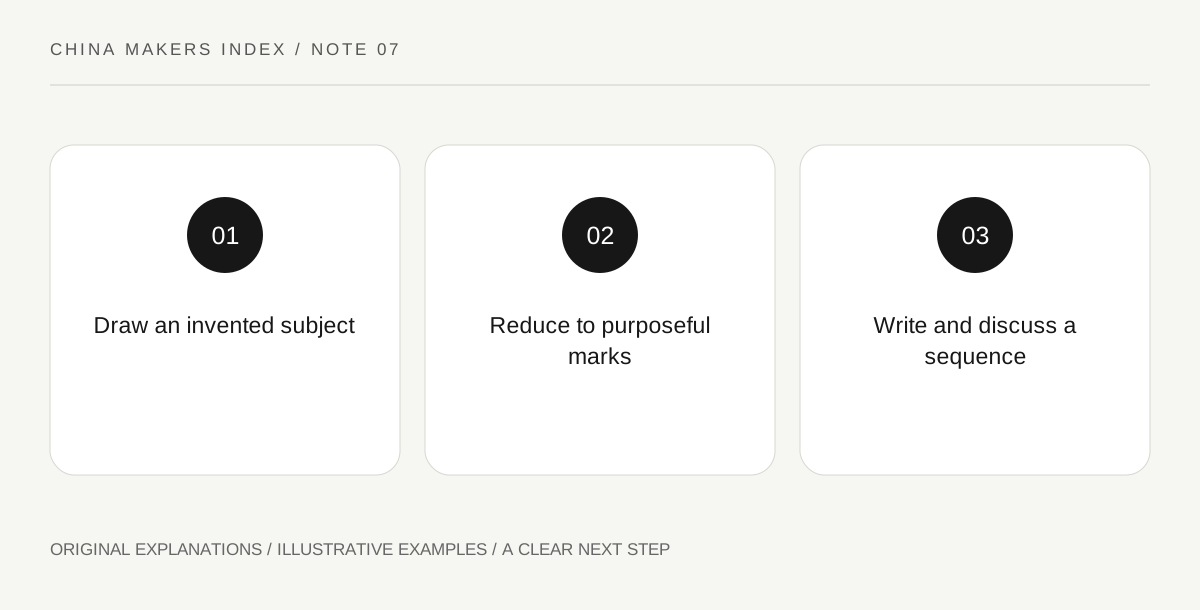
Pattern and surface3 min read
A fluent sugar-painting demonstration can make a complex image appear effortless. Study the design problem through a pen exercise: decide which lines are essential to recognition and which only add visual noise. This safe analogy develops attention to sequence and economy without giving instructions for handling hot sugar or claiming to reproduce an artisan’s method.
Read the guide ↗
Pattern and surface3 min read
Some paper objects are designed to change as they open, making one still view an incomplete account of their form. The documented craft name fanhua offers a starting point for a broader design exercise: compare an object’s compact state with its revealed state, and explain what the movement contributes to the experience.
Read the guide ↗
Objects and materials3 min read
A small textile pouch combines three practical decisions that decoration can conceal: how its edges meet, where it opens and how it hangs. Study a documented Chinese sachet through those relationships. A paper mock-up helps you ask useful workshop questions without treating a decorative bag or its aromatic contents as a medical product.
Read the guide ↗
Pattern and surface3 min read
A marbled surface can look spontaneous while still presenting a composition that must work within an object’s shape. Use a documented lacquer-fan example to ask where color gathers and where the surface remains quiet. An original colored-paper exercise studies distribution without giving instructions for lacquer, solvents or specialist finishing materials.
Read the guide ↗
Objects and materials3 min read
A small teapot can look like one continuous form even though its parts solve different design problems. Use a documented Yixing example to study the relationships of body, lid, handle and spout. A profile exercise makes those decisions visible without pretending that a drawing can establish pouring performance, authenticity or suitability for food use.
Read the guide ↗
Objects and materials3 min read
A small carved pendant is shaped by the material that remains and the spaces opened within it. Study those two outlines separately using a documented Chinese jade example. An original paper drawing reveals how an inner gap can change the reading of a creature-like form without requiring stone carving or claims about the object’s authenticity.
Read the guide ↗
Objects and materials3 min read
An elegant small container can combine materials that are easy to merge into one impression. Study a documented jade snuff bottle by focusing on the junction between its body and stopper. The exercise is about assembly and visual contrast, keeping a historical object study separate from tobacco use, valuation or a claim to authenticate a similar-looking purchase.
Read the guide ↗
Pattern and surface3 min read
A painted image inside a transparent container asks you to think about support, image and viewing direction at once. Begin with a documented Chinese inside-painted bottle, then make an original transparent-sheet analogy. The goal is to clarify the layers, leaving the real artist’s tools, access and brush control to specialist demonstration.
Read the guide ↗
Objects and materials3 min read
A vessel’s hollow center is easy to overlook because attention goes to its decorated outer wall. A conceptual study of documented Chinese piece-mold casting puts that empty space back into the explanation. Use diagrams to distinguish outer form, wall and inner cavity, with no attempt to turn the lesson into metalworking instructions.
Read the guide ↗
Objects and materials3 min read
A patch of color within a material can be a starting condition rather than an error to erase. Study a documented Chinese hardstone carving with that possibility in mind. An original paper exercise asks how a maker might respond to a given visual variation, while keeping interpretation separate from claims about the exact intention behind a historical object.
Read the guide ↗
Objects and materials3 min read
A cup need not have the circular outline that first comes to mind. A documented Chinese amber square cup offers a way to separate an object’s named function, geometric form and material. A drawing study explores those relationships while leaving historical use, condition and suitability for drinking to appropriate evidence.
Read the guide ↗
Making and credit3 min read
A finished timber structure can hide the order in which its parts become connected. A conceptual assembly map brings that sequence into view. Begin with the documented Chinese timber-framing tradition, then use an invented paper diagram to distinguish components, connections and stages without treating a sketch as structural design or repair advice.
Read the guide ↗
Objects and materials3 min read
An abacus is both a made object and a surface for representing changing information. Studying it only as rows of decorative beads misses that relationship. Use a documented Chinese zhusuan reference to distinguish the physical frame from the rules of interpretation, then try an original paper-state exercise that requires no claim of instant calculation mastery.
Read the guide ↗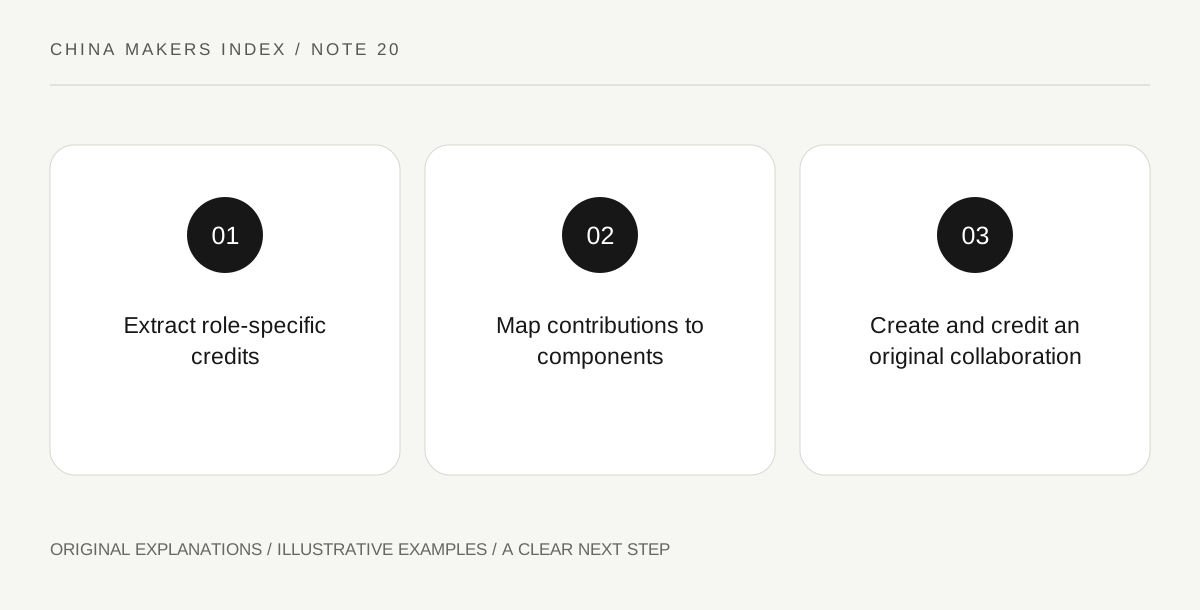
Making and credit3 min read
A finished object can look unified while carrying work by several named people. A documented Chinese folding fan makes that collaboration visible through carved frame, painted surface and calligraphy. Build a contribution map that preserves those roles instead of letting the most prominent name absorb every part of the object’s making.
Read the guide ↗